Puppy treats

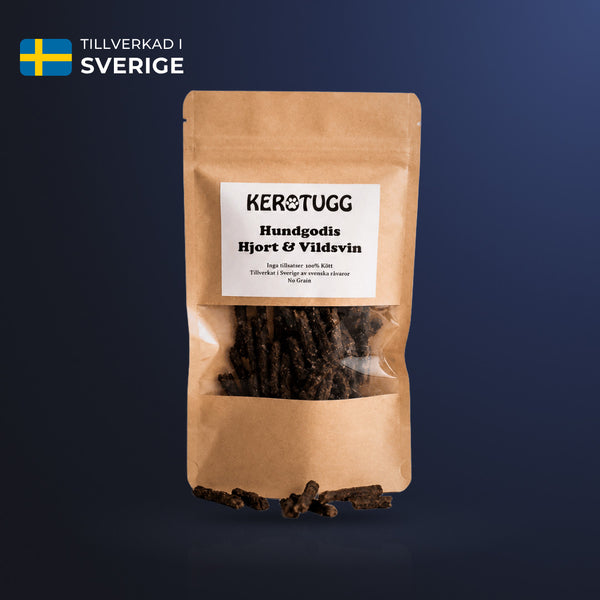
Dog treats for puppies should be small, easy to chew and gentle on a stomach that is still getting used to new food. They can be small training bites, airy lung, freeze-dried meat or dried fish, ideally made from a single ingredient. Start with one kind at a time, and you will soon notice what your puppy tolerates and likes.

Filter and sort 14 products
Sort by

How to choose and use dog treats for puppies

Treats are the quickest way to show a puppy what you want. A puppy's stomach is new to most things, and puppies train in short sessions with lots of repetitions, so the treats need to be gentle and something you can give often.

When can a puppy start having treats?

A puppy can start having dog treats once it has moved home, usually at about eight weeks, but wait a few days. Let the stomach first get used to the move and the food, and then give one kind at a time in small amounts. If you notice the stools getting looser, go back to what your puppy tolerated. Then you will also know which kind didn't work, which is harder if you have given three new ones on the same day.

Which treats are easiest to chew with puppy teeth?

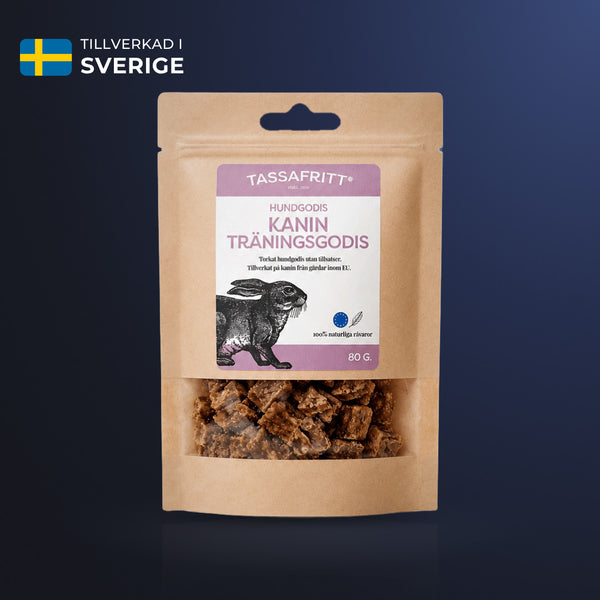
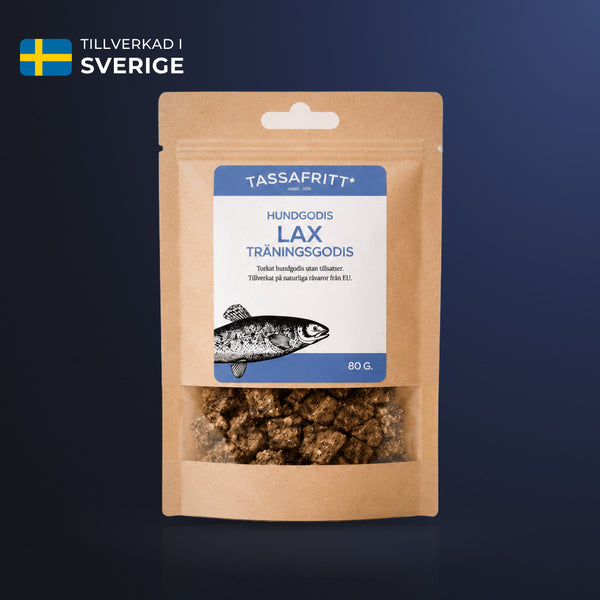
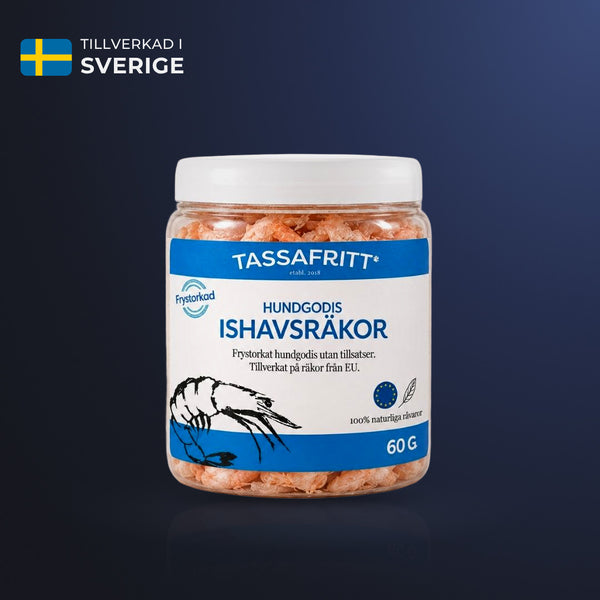
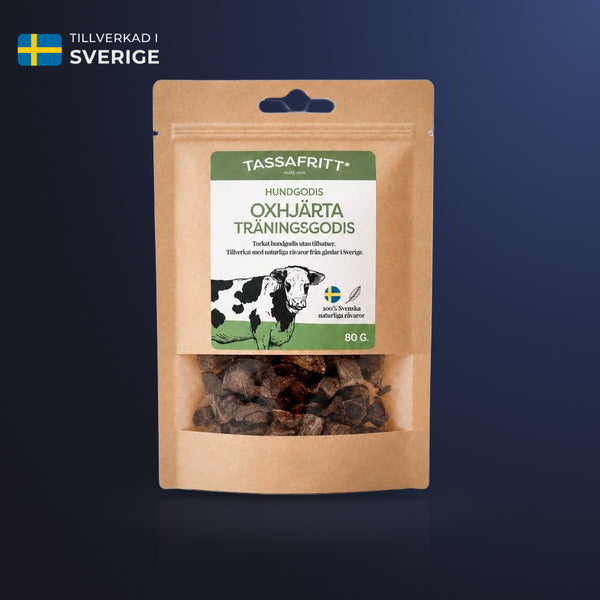
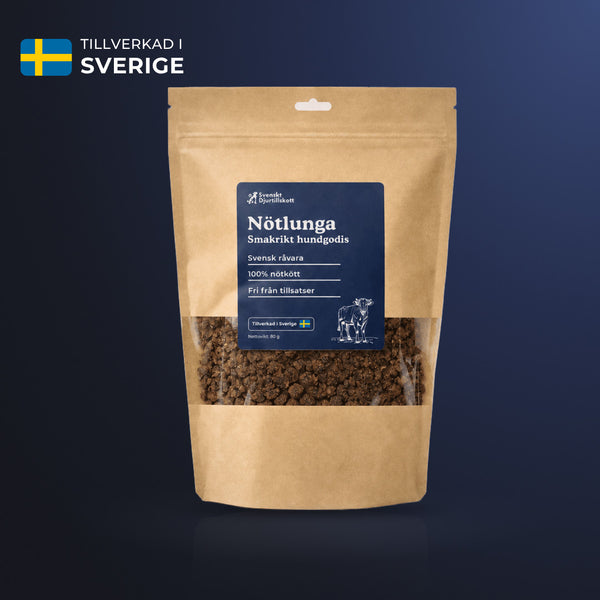
The easiest treats for puppy teeth are those that give way when the puppy bites. Beef lung (Nötlunga) has a light, airy texture that even puppies can chew, and freeze-dried meat crumbles when the puppy bites into it. In the training range, lamb, rabbit and duck are dried muscle meat, diced to about half a centimetre: firmer, but so small that the puppy swallows them in a second. Larger pieces, such as the 2 × 2 centimetre salmon treats, should be broken into smaller bits before training.

How many treats can a puppy have?

Treats and rewards should make up no more than about a tenth of what the puppy eats during the day. A puppy in training gets lots of rewards in a short time, so the pieces need to be small and counted as part of the daily ration. If you train a lot one day, you can cut back a little on food. Our article on how many treats a dog should have describes the signs that it has become too much.

Which puppy treats suit a sensitive stomach?

A puppy with a sensitive stomach usually does best with treats made from a single protein source, so that you know exactly what it has eaten. Ox lung is low in fat and sprats contain an easily digestible protein, and both are stated to suit many dogs with a sensitive stomach. If your puppy reacts to something, you can switch to another kind and see the difference. If your puppy needs something to chew on during teething, puppy chews are a better fit than treats.

How we choose our range

We look for treats that can be given in small pieces without you having to cut them, and that are made from one or two named ingredients without grain or additives.

Comparison: Puppy treats
TypeExampleTexturePiece sizeGood when your puppy
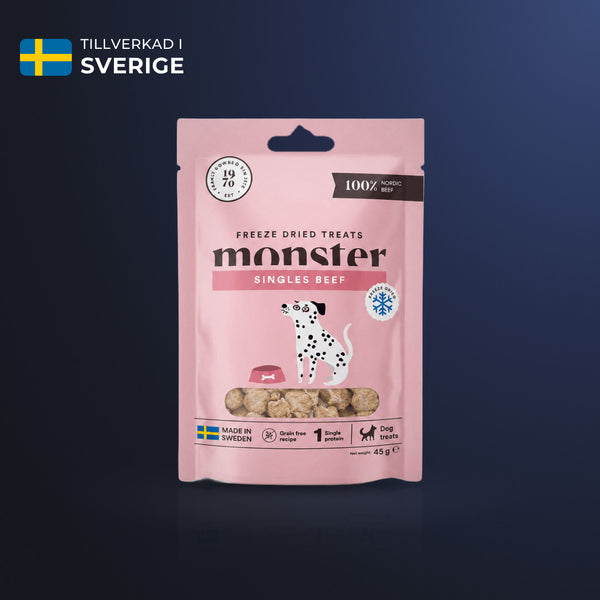
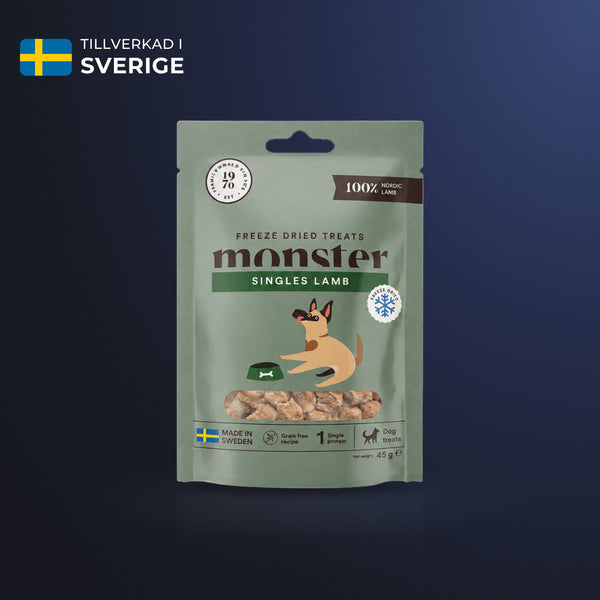
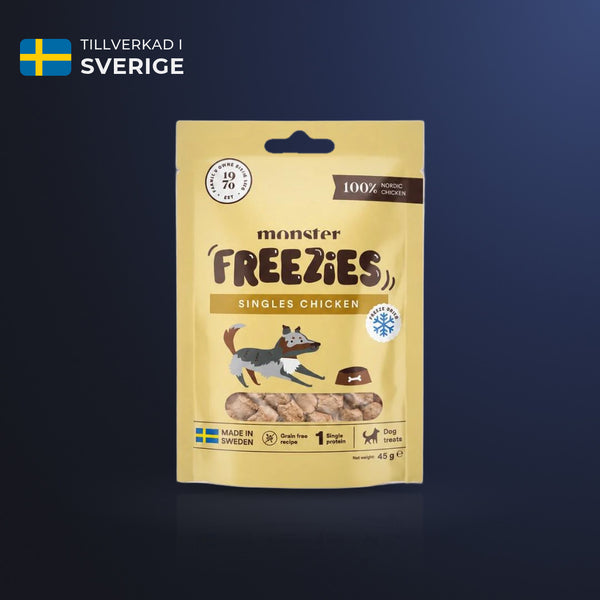
Freeze-driedFrystorkat Hundgodis Lamm 45gLight, crumblesSmall piecesIs fussy or easily distracted
LungNötlunga 80 gAiryBroken to any sizeHas just come home
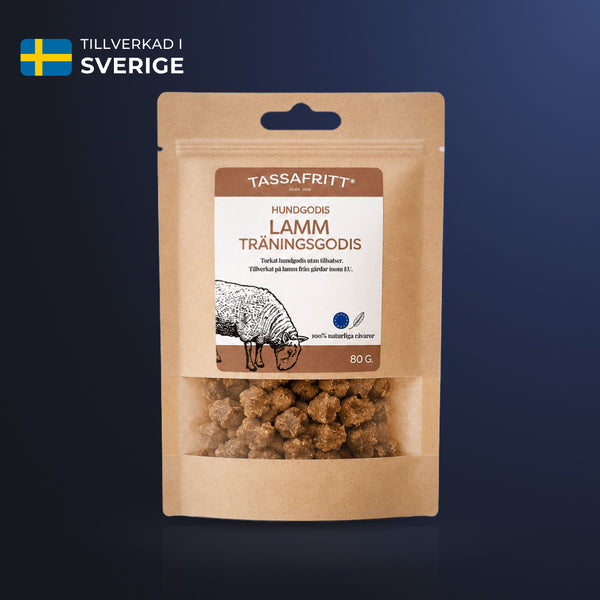
Training treatsTräningsgodis LammDried, firm0.5 × 0.5 cmTrains with lots of rewards
Training treatsTräningsgodis KaninDried, firm0.5 × 0.5 cmNeeds a new flavour
FishHundgodis LaxDried2 × 2 cm, brokenNeeds a change from meat

Swipe to see the full table →

Frequently asked questions about puppy treats

Does my puppy need special puppy treats?

No. What decides whether a treat suits a puppy is the size of the pieces, how easy they are to chew and what they contain. Small pieces made from a single ingredient, without sugar or grain, suit a dog of any age. Nötlunga (beef lung), for example, is stated to suit both puppies and seniors.

Which treats are best for puppy training?

Small, strong-smelling pieces that the puppy eats quickly are best, so that it is ready for the next exercise straight away. The half-centimetre training treats are made for exactly that. Outdoors, where there is a lot to tempt your puppy, the strong smell of lung helps catch its attention. Keep the treats in your pocket or a treat pouch – dried treats aren't messy.

Can my puppy have freeze-dried treats?

Yes. Freeze-dried treats are just meat with the water removed, and they become so light and crisp that even small puppy teeth can manage them. The manufacturer states that the freeze-dried lamb treats suit dogs at all life stages. Seal the bag after each use, as freeze-dried treats absorb moisture.

Can my puppy have fish treats?

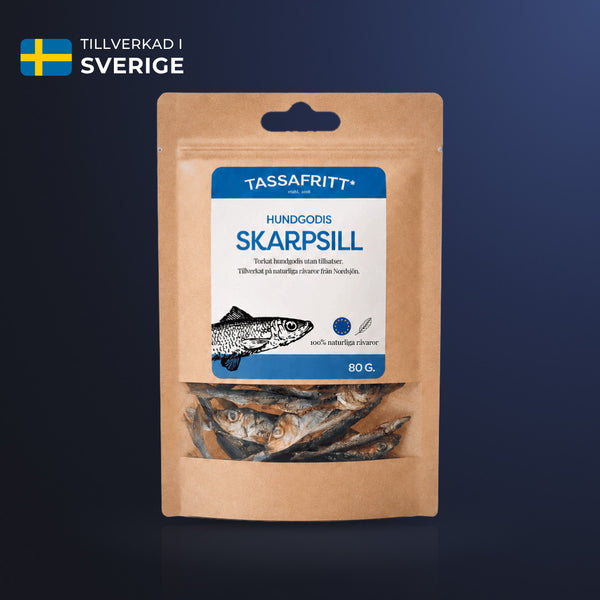
Yes. Sprats, salmon and dried mussels are all made from a single ingredient and are naturally rich in omega-3. Sprats are crisp and can be broken into small pieces, and the mussels are small and contain only about 2% fat. Fish is a good way to add variety when your puppy has had meat for a while.

Can treats give my puppy an upset stomach?

It can happen, especially with a new kind or too much at once. If your puppy has diarrhoea that doesn't go away, is vomiting or seems listless, contact a vet, because a small puppy loses fluids quickly.

Can I use my puppy's ordinary food as a reward?

Yes, and it is a good way to keep the amount of treats down. Measure out part of the day's food in the morning and use it for easy exercises during the day. Save the real treats for the hardest things, such as recall or meeting other dogs.

Updated