Chew bones for puppies

Puppy chews should be softer and smaller than ordinary chews, because a puppy's teeth and jaw are still growing. They can be dog chews, chew sticks or ears, as long as the chew gives under small teeth and is too big to be swallowed whole. Start with the softest ones during the first weeks at home and wait with harder dog bones until the adult teeth are in place.

Filter and sort 11 products
Sort by

How to choose chews by your puppy's age

A puppy chews because its teeth are growing and its gums itch, and anything at mouth height becomes interesting. Which chew suits your puppy changes during the first six months, as the teeth change.

Which chew suits a puppy at 8, 10 and 12 weeks?

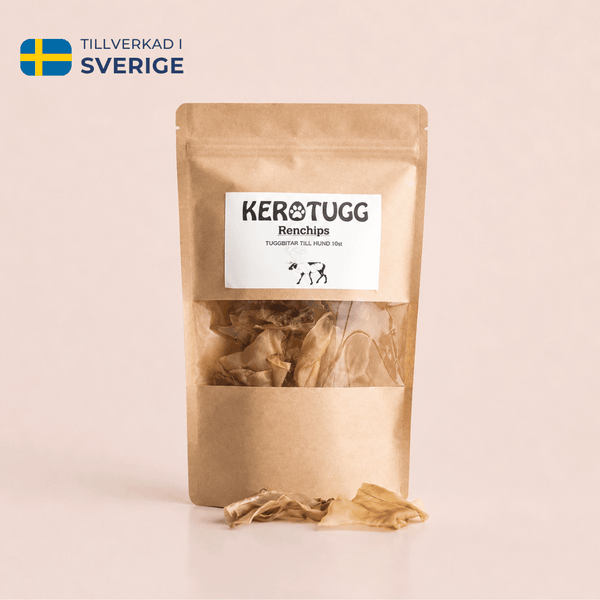
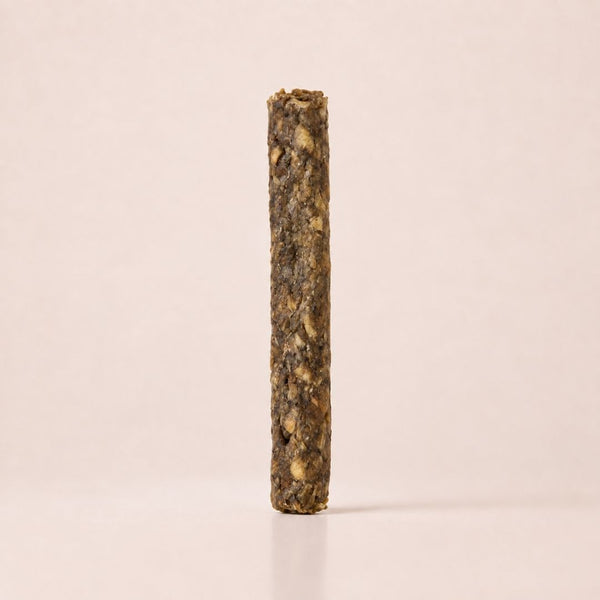
Most puppies can handle a soft chew from about 8 to 10 weeks of age, that is, from the time they come home. Start with something that gives under the teeth: Crunchy Hjort is made from crushed deer skin, which makes it softer than an ordinary chew, and thin reindeer chips or chews made of fallow deer hide also work early on. From 12 weeks, about three months, your puppy can try Tuggboxen Valp, a box of eight different chews made of reindeer and beef.

Which chew is best for puppy teeth during teething?

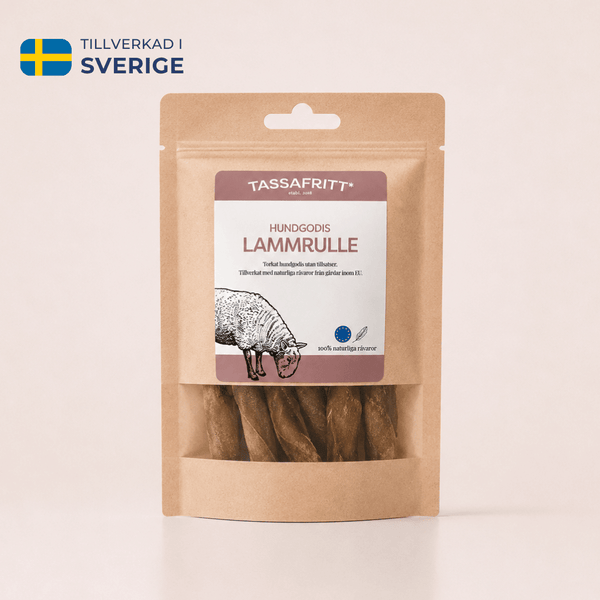
During teething, a chewy chew helps more than a hard one. Teething lasts from roughly four to seven months of age, and that is when the gums itch. Give your puppy something chewy to work on, for example a lamb chew roll or a reindeer-skin chew filled with beef. The chew should give resistance without the puppy having to bite down with full force on a loose tooth.

How big should a puppy's chew be?

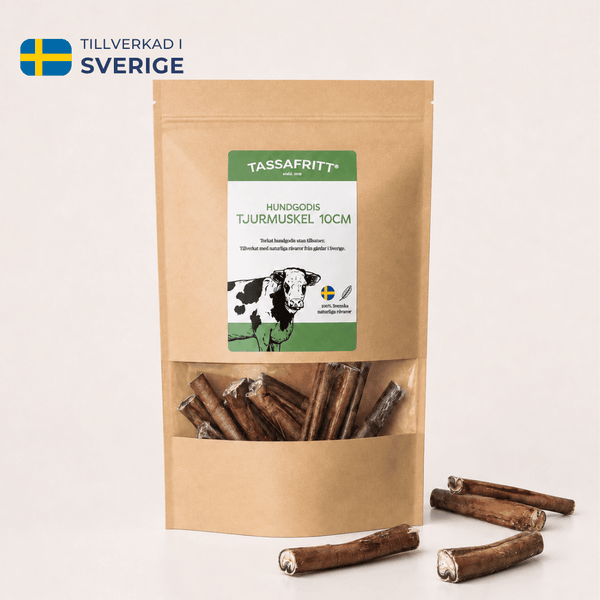
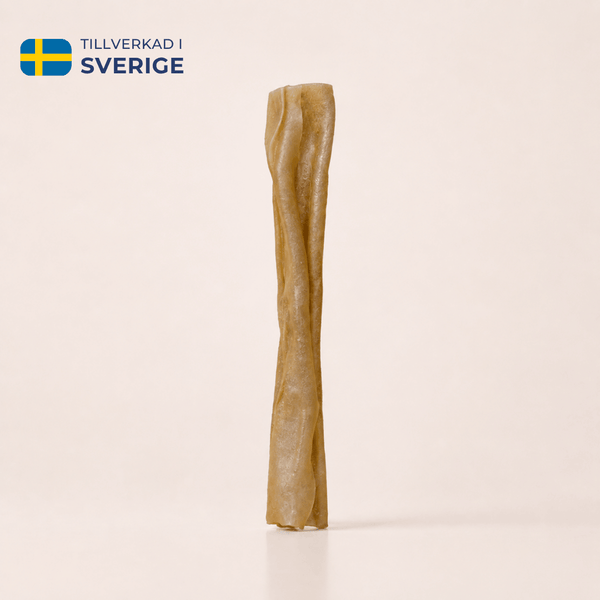
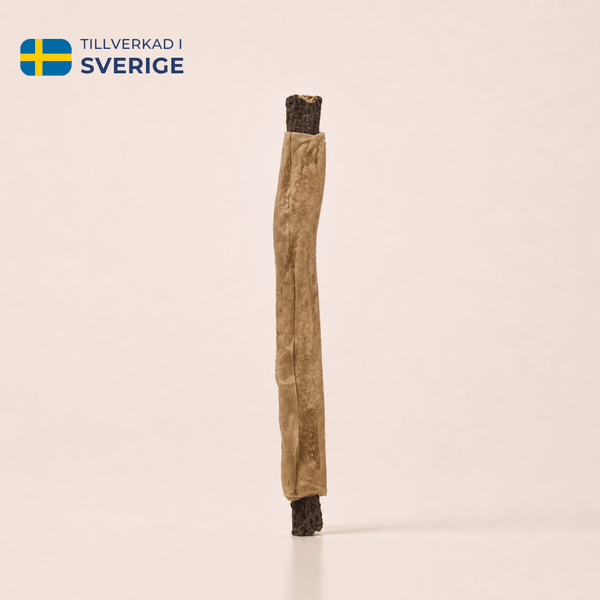
A puppy chew should be bigger than the puppy's mouth opening, so that it can't be swallowed whole, but not so big that the puppy can't get a grip on it. For most puppies that means 10 to 15 centimetres. The 10-centimetre bull muscle chew is made for small mouths, and Powerstick is a dense 15-centimetre chew stick made from a single piece of beef skin. Switch to a bigger size when your puppy has outgrown the small one.

How often and for how long can a puppy chew?

A puppy can chew every day, preferably in a session of 15–30 minutes under supervision. Chewing does good even in sessions this short. Put the chew away between sessions and remove it when it has become small enough to be swallowed. If you want to read more about what is safe for your puppy, our article goes through it step by step. If you are looking for something to reward with during training, puppy treats are a better fit than chews.

How we choose our range

Here we gather soft and chewy chews in sizes for small mouths. Antlers, bones and hard-rolled chews will have to wait until the adult teeth are in place. That is when it is time to look among our regular dog chews.

Product manager at Svenskt Djurtillskott

Comparison: Chew bones for puppies
Raw materialExampleTextureShapeGood when your puppy
DeerCrunchy Hjort 13cmSoft, easy to chewCrushed skin, 13 cmHas just come home, 8–10 weeks
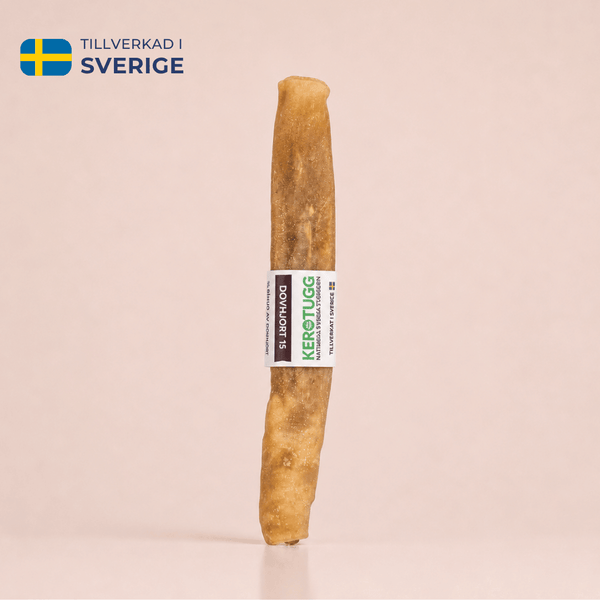
Fallow deerTuggben 100% Dovhjort HudSoft to medium-softRolled hideHas sensitive teeth
Reindeer and beefTuggben Renbiff 15cmSoftReindeer skin filled with beef, 15 cmNeeds extra flavour to get interested
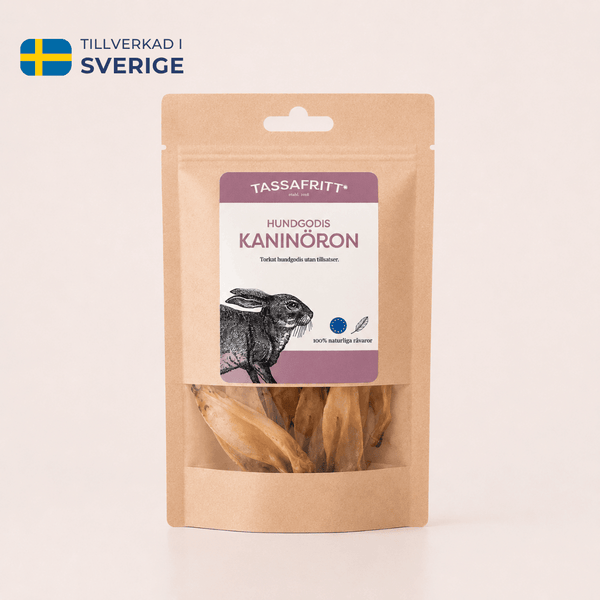
RabbitKaninöron till HundModerately chewyWhole earsHas a sensitive stomach
LambLamm Tuggrulle till HundChewyRolled skin, about 15 cmIs teething, 4–7 months
BeefTuggben Powerstick Biff 15cmDenseChew stick, 15 cmWants to chew for a longer while

Swipe to see the full table →

Frequently asked questions about chew bones for puppies

Is rawhide dangerous for puppies?

Rawhide is dried hide, and that is what most dog chews are made of. Rawhide becomes risky when it has been bleached, glued together from leftovers or comes from an animal that isn't stated. Choose chews whose product page names the animal, for example reindeer, fallow deer or beef, and avoid white, uniform chews with no stated origin.

Can a puppy have antlers, marrow bones or other bones?

Antlers and bones should wait until all the adult teeth have come through, which for most dogs is when teething is finished at about seven months of age. Antlers and marrow bones are among the hardest things a dog can chew, and a puppy tooth that is coming loose or has only just come through can't take that pressure. During puppyhood, a chewy chew made of skin or muscle is a better choice.

Can a puppy have bull muscle?

Yes. The 10-centimetre bull muscle chew is made of 100% Swedish beef and is stated to suit puppies as well as small and medium-sized dogs. It becomes softer and smells more as the puppy chews, so it is a good idea to give it on a floor that is easy to wipe. Put the piece away when it has become small enough to be swallowed.

How do I get my puppy to stop chewing furniture?

Give it something it is allowed to chew on, and swap the forbidden thing for the allowed one every time. Take the chair leg out of its mouth, offer the chew and praise your puppy when it takes it. Puppies chew most when they are tired or bored, so a chewing session after the walk prevents more than a "no". The need usually fades when teething is over.

What is in Tuggboxen Valp?

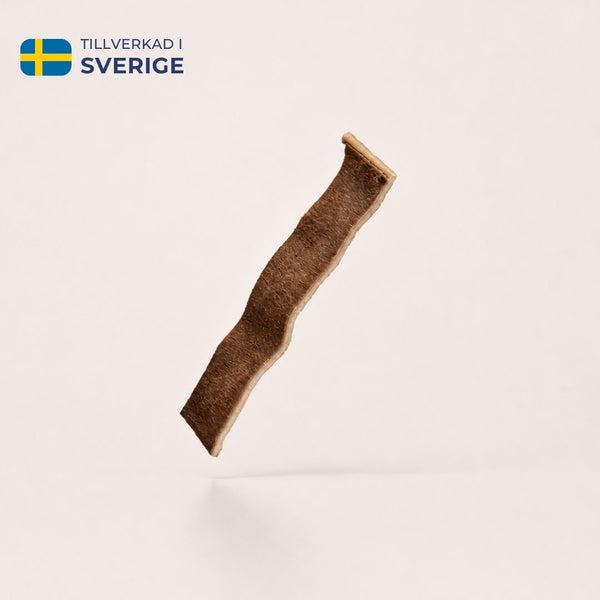
Eight natural chews of Swedish reindeer and beef: two reindeer hide chews, two beef hide chews in size S, two Renbiff chews and two beef strips. The box is intended for puppies from 12 weeks and lets your puppy try different shapes and textures to see what it likes.

Updated