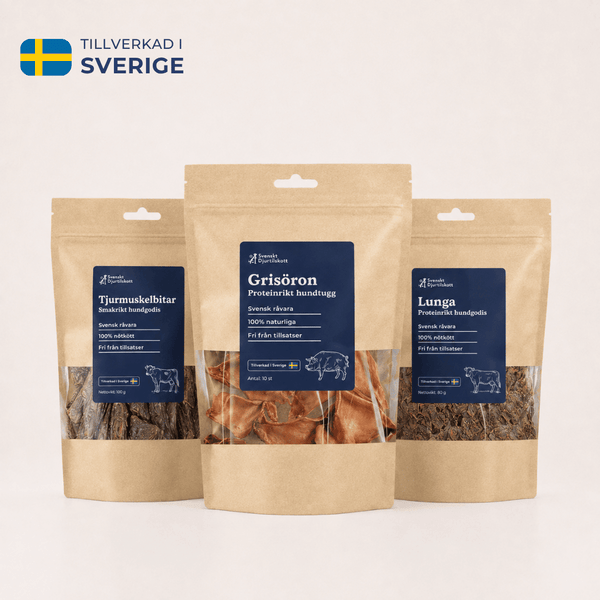
Dog treats

Dog treats can be dried meat, game or fish, in everything from small training bites to larger pieces you break up yourself. Good dog treats have few, clearly named ingredients and do without sugar, grain and preservatives. Choose by how the treats will be used: as a reward during training, as a snack between meals or as a topping on food.

Filter and sort 30 products
Sort by

How to choose the right dog treats

Which dog treats suit your dog depends on how you will use them, how big your dog is and how sensitive its stomach is. Below we go through the differences between the most common types, so you don't have to guess.

What kinds of dog treats are there?

The most common types are dried muscle meat, dried organ meat such as lung and heart, freeze-dried pieces and fish. Muscle meat and organ meat differ most in texture – lung is light and airy and can be broken with your fingers, while heart is firmer and denser. Freeze-dried treats keep their smell better and are often what works for fussy dogs. Fish gives a different source of protein than meat and provides omega-3. Bone broth isn't a reward but a topping you pour over the food.

What is the difference between freeze-dried and air-dried?

Freeze-drying removes the water while the food is frozen, under vacuum, whereas air-drying does it with heat and air. Freeze-dried treats become lighter and crisper, keep more of their smell and crumble easily – good for dogs that aren't interested in ordinary treats. Air-dried and gently dried treats become chewier and last longer in the mouth. Freeze-dried meat pieces belong to the first group, while dried lung and diced training treats are usually air-dried.

What piece size and texture suit your dog?

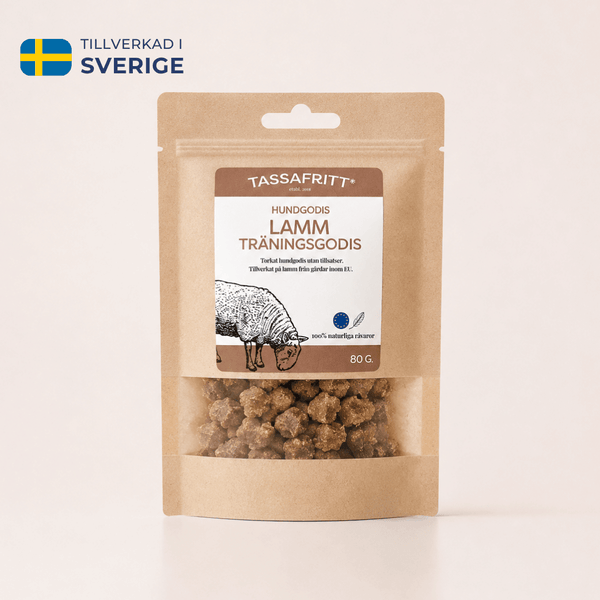
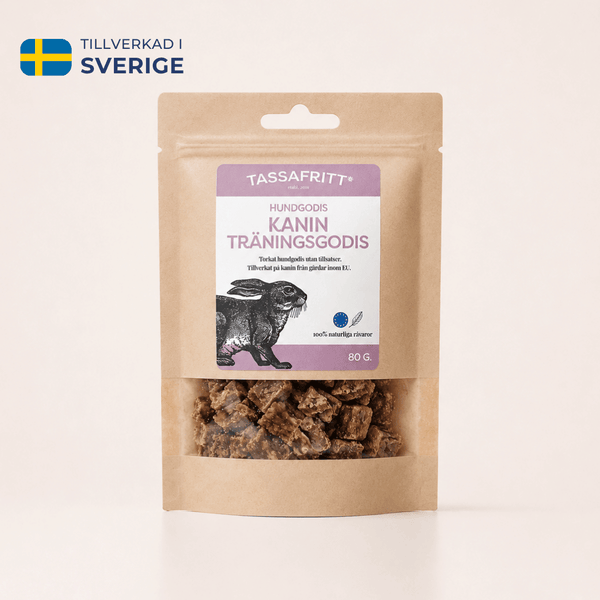
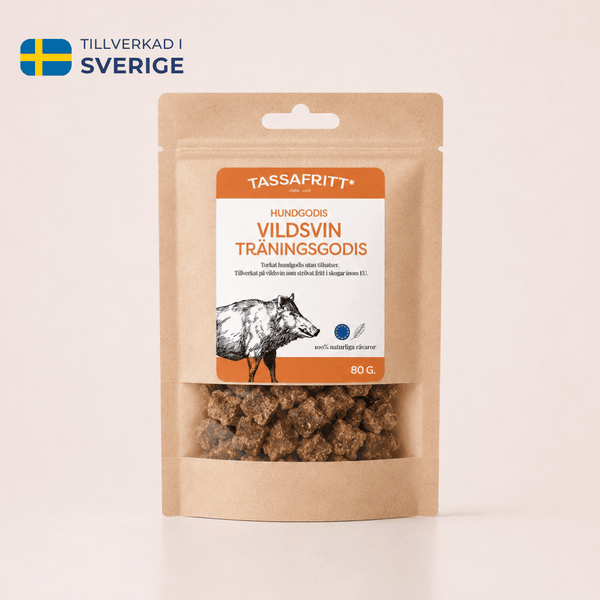
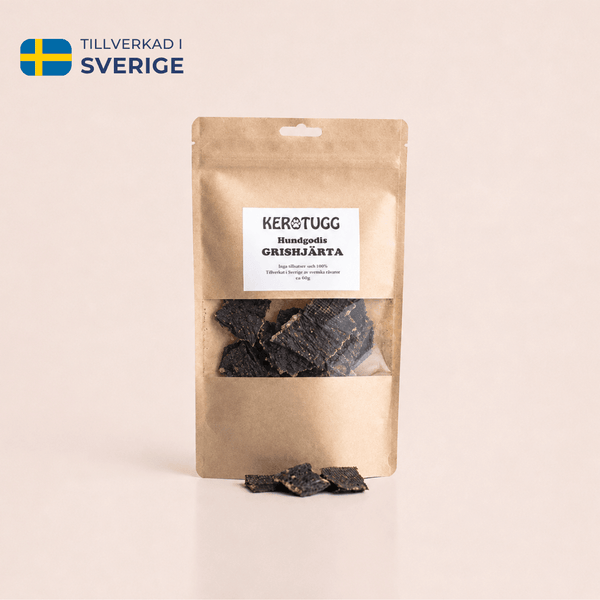
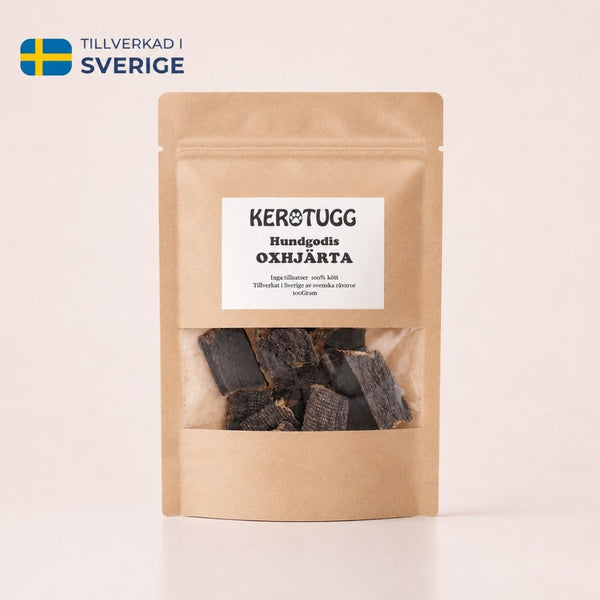
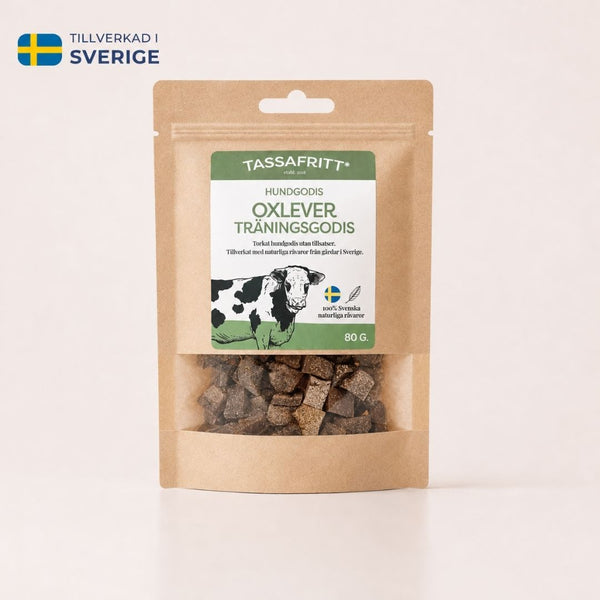
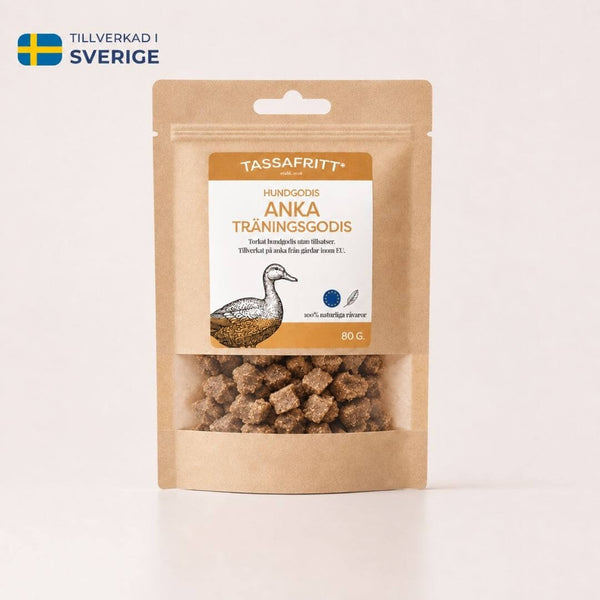
Choose the piece size by how often you will reward, not by the size of your dog. In training where you reward often, pieces of about 0.5 × 0.5 cm work best – the treat doesn't take focus away from the exercise, and the amount stays manageable even during a long session. Our training treats of lamb, rabbit and wild boar are that size. Larger pieces of 2–3 cm, such as pig heart and ox heart, are better as an occasional reward or a snack. Lung and sprats can be broken into whatever size you like. If your dog needs something that lasts longer than a reward bite, a dog chew is a better fit. Think about texture as well: dried treats aren't messy and can stay in your pocket for the whole walk, while softer treats need a treat pouch.

What should you look for in the ingredients list?

Look for few ingredients that are clearly named. If it says "100% lamb", you know exactly what your dog is eating; if it says "animal by-products", you don't. This matters most for dogs that react to certain proteins, because then you can change one thing at a time and see what works. Avoid sugar, grain fillers and colourings – they add nothing for the dog. Treats made from a single protein source make it easy to try things out. For dogs with recurring stomach problems, the choice of treats is rarely enough – then it is your dog's gut flora that needs support.

How we choose our range

We look for treats with few, clearly declared ingredients. We avoid treats with vaguely declared animal by-products, grain fillers, sugar, colourings and unnecessary binders – dog treats should be easy to understand, not require you to decipher a long ingredients list.

Comparison: Dog treats
TypeExamplePiece sizeSuitable forIngredients
Training treatsTräningsgodis Lamm0.5 × 0.5 cmTraining with lots of rewards1 – 100% lamb
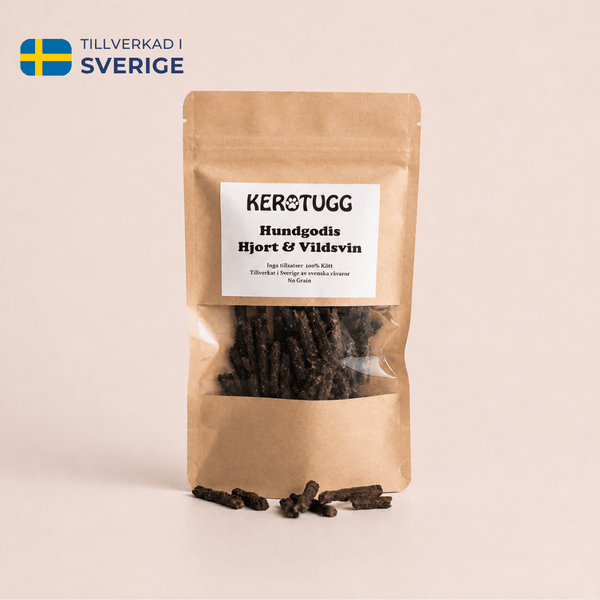
Game treatsTräningsgodis Hjortlunga1 × 1.5 cmFussy dogs, nose work1 – 100% deer lung
LungNötlunga 80 gBroken to any sizePuppies and seniors, easy to chew1 – 100% Swedish beef
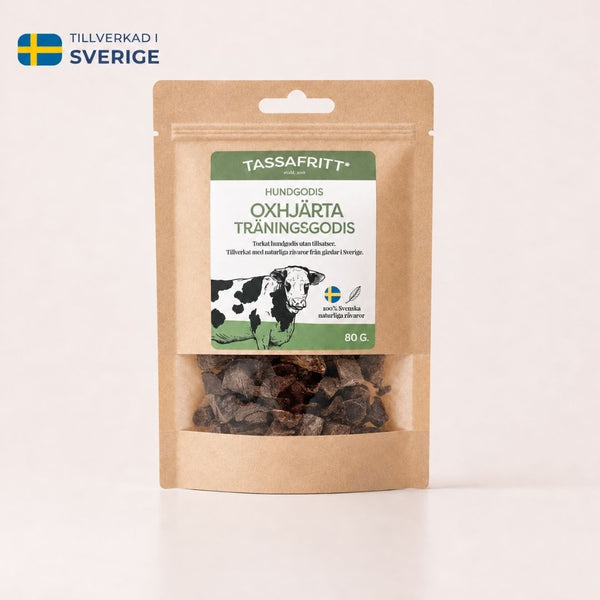
HeartHundgodis av Oxhjärta1–3 cmOccasional reward, 83% crude protein1 – 100% ox heart
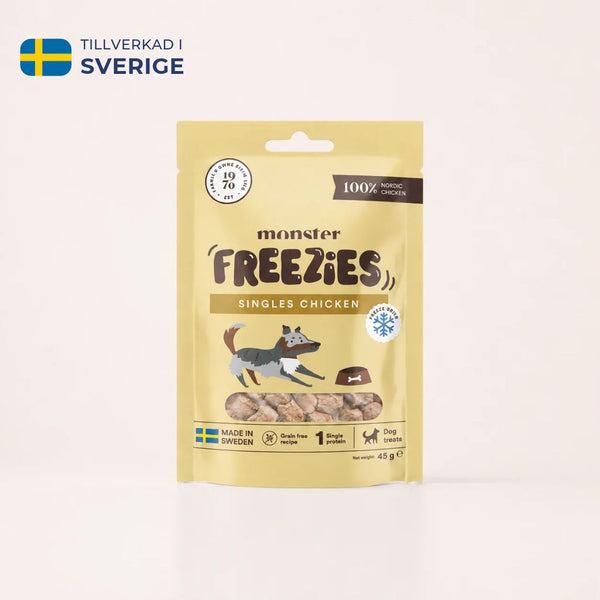
Freeze-driedFrystorkat Hundgodis Lamm 45gSmall piecesFussy dogs, dogs prone to allergies1 – 100% lamb
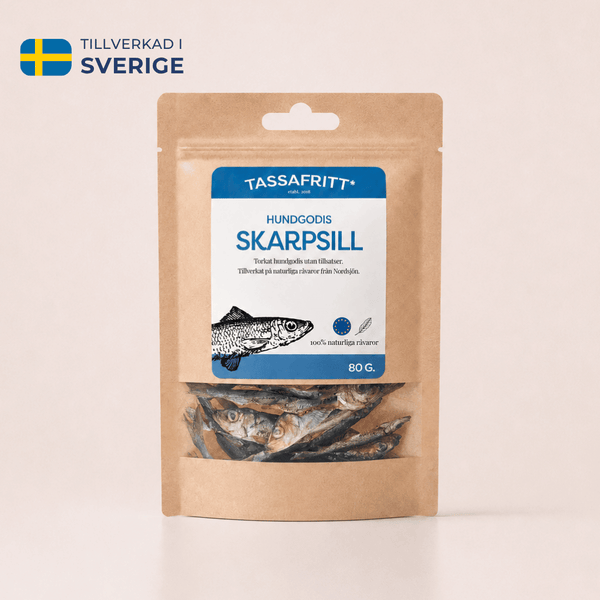
FishSkarpsillWhole fish, brokenOmega-3, an alternative to meat1 – 100% sprats
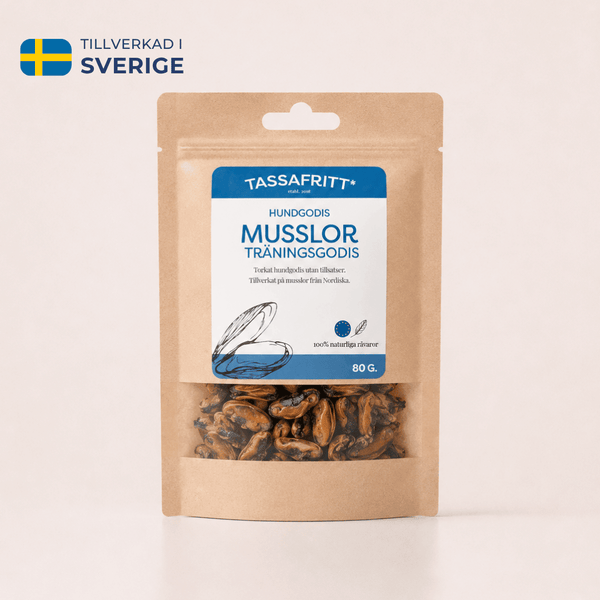
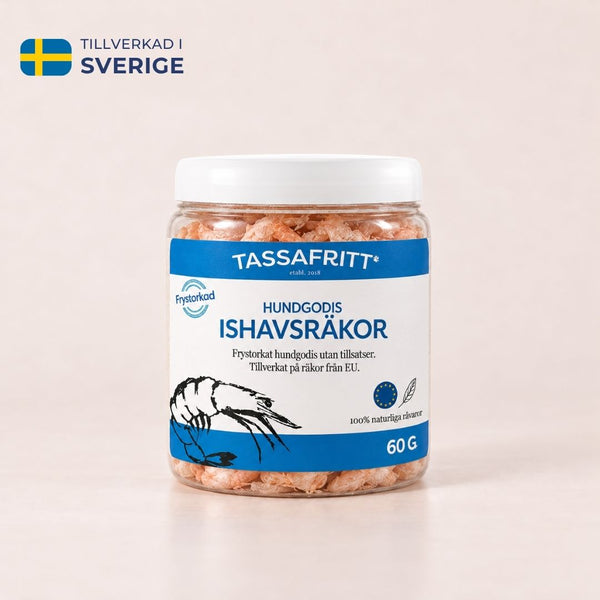
ShellfishTorkade MusslorSmall, about 2% fatTopping on food1 – 100% mussels

Swipe to see the full table →

Frequently asked questions about dog treats

Which protein source should I choose for my dog?

Start with a protein source your dog already tolerates and that differs from its daily food. If your dog eats chicken-based food, lamb, rabbit or wild boar can add variety without overlapping. If your dog reacts to common proteins, fish is often a good alternative: sprats and mussels contain an easily digestible protein and also provide omega-3. Choose treats made from a single protein source, so you can test one at a time and see what works.

Can puppies eat dog treats?

Yes, from the time the puppy starts eating solid food. Choose treats that are easy to chew and easy to break into small pieces – beef lung and freeze-dried pieces work well. Avoid hard chews for puppies that are teething. Count the treats as part of the daily ration and start with small amounts when the stomach is new to something.

Which dog treats suit dogs with a sensitive stomach?

Treats with few ingredients and no additives are usually easiest on a sensitive stomach, because there is nothing extra that can upset it. Lean options such as beef lung, ox lung and dried mussels are low in fat, which many stomachs handle better than fatty products. Change one thing at a time and give new treats in small amounts for the first few days. If the problems keep coming back, it is rarely about the treats but about the gut flora.

How many dog treats can you give?

As a guideline, treats and rewards should make up no more than about ten percent of the daily intake. A training session uses a lot of pieces, and that is exactly why small pieces of half a centimetre are useful: they keep the amount manageable. If you give larger pieces as a snack, one or two a day is often enough. Reduce the amount of food slightly on days with lots of treats.

How long does an opened pack keep?

Dried treats keep for a long time if they are stored dry and cool in a closed pack. Freeze-dried treats are the most sensitive to moisture and should be sealed properly after each use. If the treats smell or feel different from when you opened them, throw them away.

What are natural dog treats?

Natural dog treats contain only the raw ingredient itself – dried or freeze-dried meat, game or fish – without sugar, grain, colourings or preservatives. The term isn't protected, so almost anything can be called natural. That is why you should look at the ingredients list: if it lists one or two clearly named raw ingredients, that is exactly what you get.

Updated