Chew bones

Dog chews are for longer chewing sessions. A puppy gets through soft chews such as ears and thin hide in a few minutes, while antlers can last for weeks. A good chew is made from natural, declared raw material without bleach, glue or preservatives. Choose by how hard your dog chews, not by its age – it is the jaw that decides, not the date of birth.

Filter and sort 44 products
Sort by

How to choose the right dog chew

Chewing is a natural behaviour that gives your dog both something to do and a sense of calm, and a dog that can satisfy its need to chew on the right thing chews less on furniture and shoes. But not every chew suits every dog. Here is what really matters.

Which chew suits your dog's size and chewing strength?

Start from your dog's weight and jaw strength, not its age. A chew that is too small for the dog can be swallowed whole, while a chew that is too big or too hard is difficult for a small dog to get a grip on. The raw material determines how tough the chew is: pig ears and reindeer hide are the softest, fallow deer and elk chips are in between, beef hide is the classic medium-hard choice and deer antler is among the hardest things a dog can chew. Many chews come in several sizes, so the same raw material can suit both a dachshund and a German shepherd.

How long does a dog chew last?

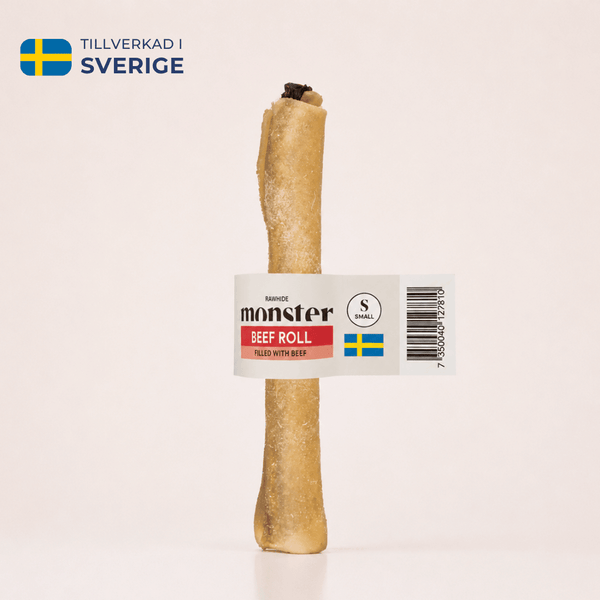
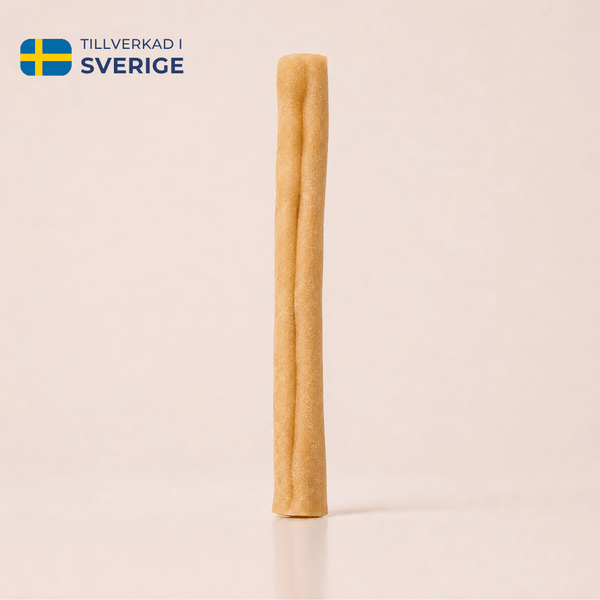
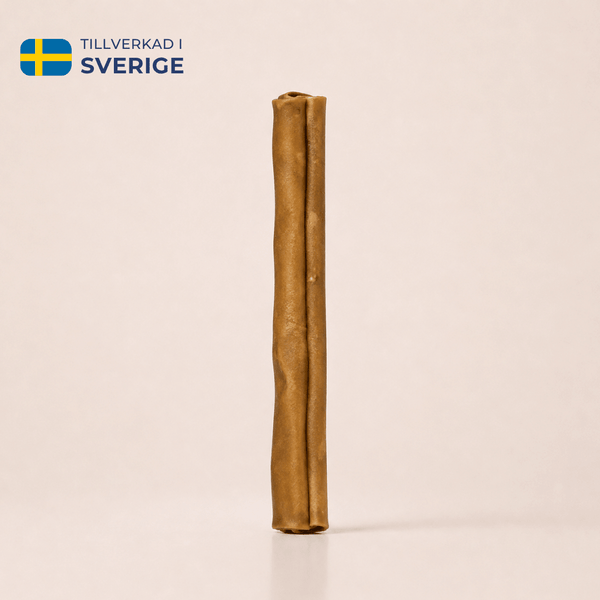
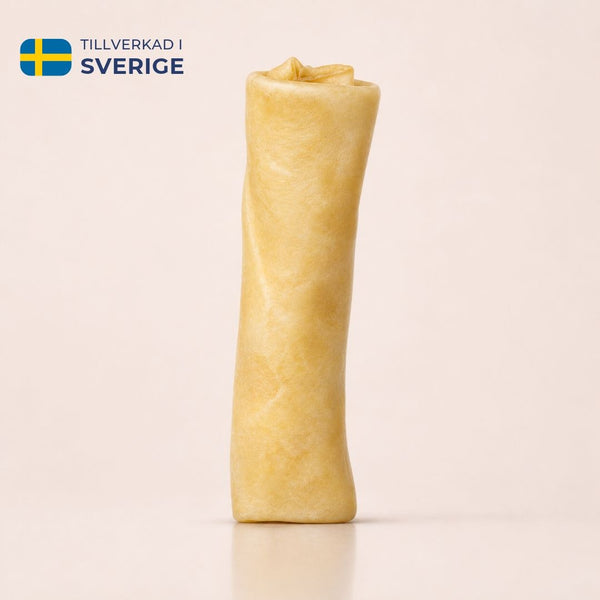
Anything from twenty minutes to several weeks of repeated chewing sessions. Flat chips of beef, elk or reindeer are finished in a few minutes and work as a daily snack. Rolled chews and bull muscle keep the dog busy for a while each time. Deer antler is at the other end and often lasts for weeks, because the dog gnaws a little at a time instead of chewing it to pieces. Store what is left somewhere cool and dry between sessions.

Which chew suits a puppy?

Choose soft and small. During teething the jaw is sensitive, and hard chews such as antlers should wait until the permanent teeth are in place. Pig ears, reindeer hide and fallow deer hide are soft enough to start with, and the shorter versions of around ten to fifteen centimetres suit smaller mouths. We have gathered what works for the youngest dogs on a separate page for puppy chews.

How do you know a dog chew is safe?

Look at three things: the raw material, how it is made and the size. The raw material should be declared, meaning it says which animal and which part the chew comes from. It should be made without bleach and glue – rawhide is sometimes bleached to make it white and even, so be wary of chews that are unnaturally white. The size should be bigger than your dog's mouth opening. Keep an eye on your dog the first few times it gets a new chew, and remove pieces that have become small enough to be swallowed whole. If you want to read more about the link between chewing and oral health, our article on tartar in dogs goes through what really affects your dog's teeth, and where SMILE+ complements the chewing.

How we choose our range

We look for chews where the raw material and the way they are made can be traced, and we avoid chews with bleach, glue, colourings and vaguely declared animal by-products.

Product manager at Svenskt Djurtillskott

Comparison: Chew bones
Raw materialExampleHardnessChewing timeSuits
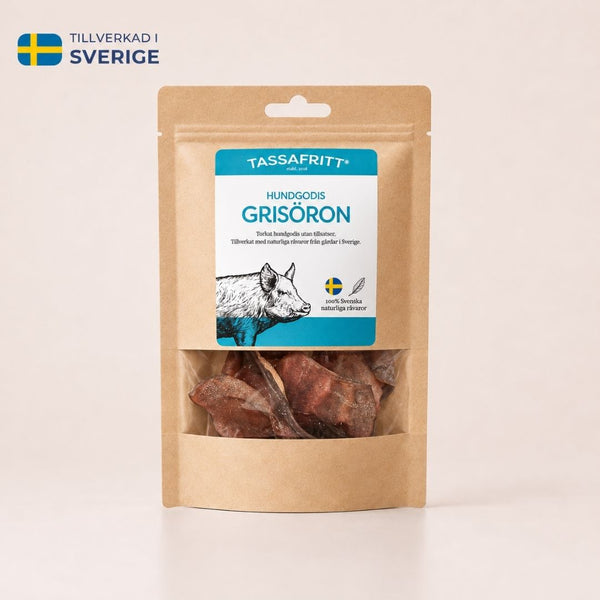
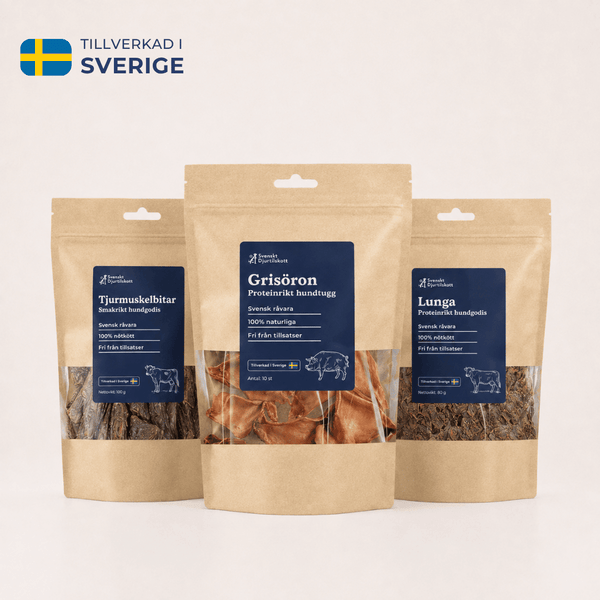
Pig (ears)Grisöron till HundSoftestShortAll dogs, a good introduction for puppies
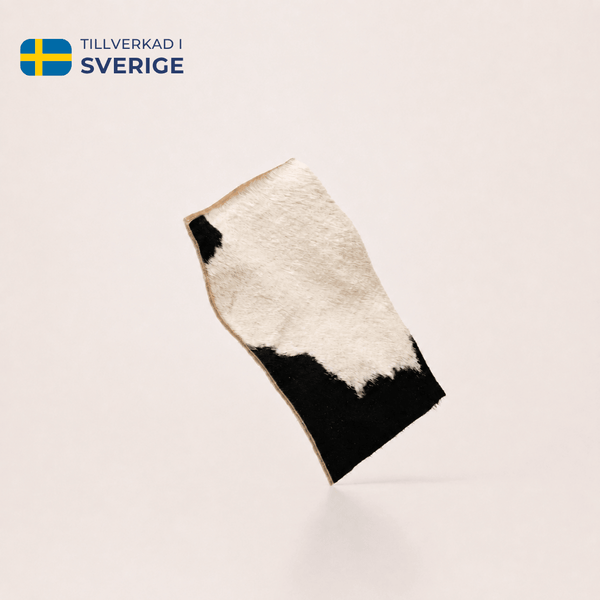
Reindeer (hide)Tuggben 100% RenhudSoft to mediumMediumDogs that are new to chews
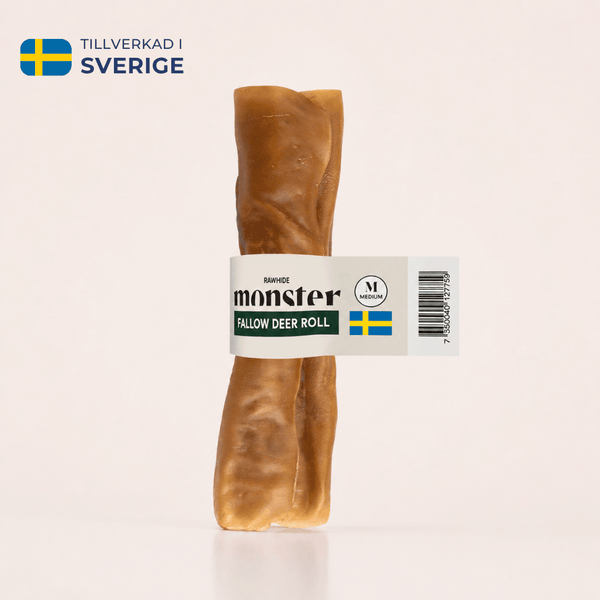
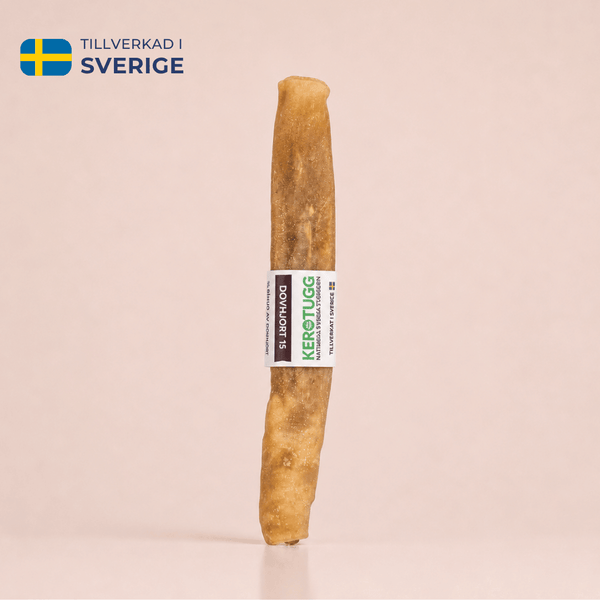
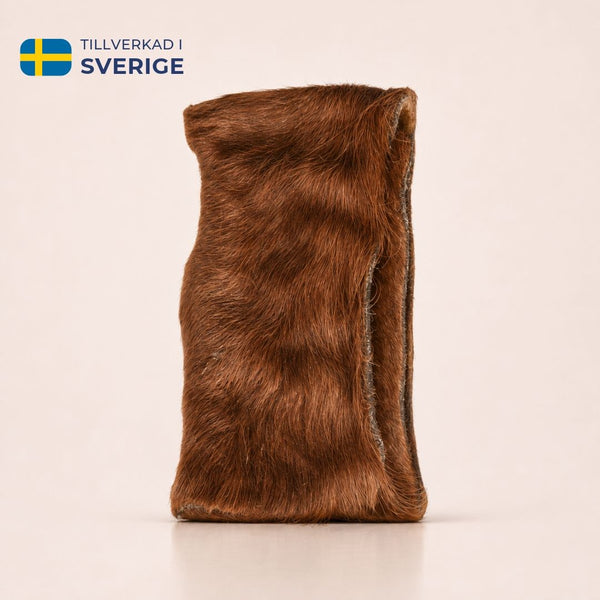
Fallow deer (hide)Tuggben 100% Dovhjort HudSoft to medium-softMediumPuppies, seniors, sensitive chewers
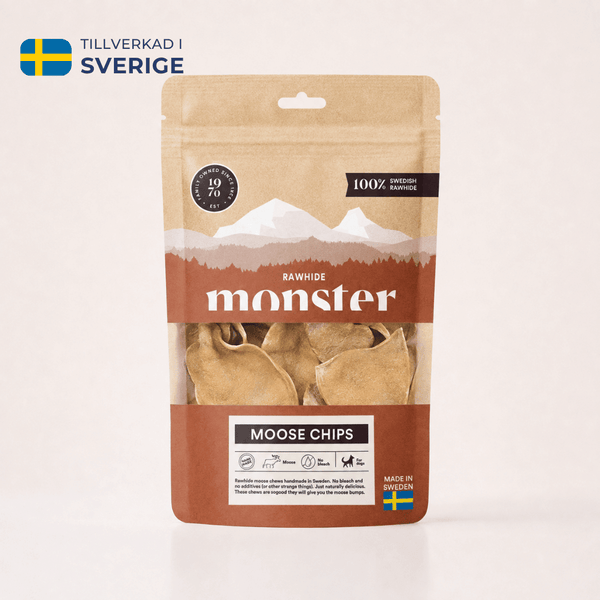
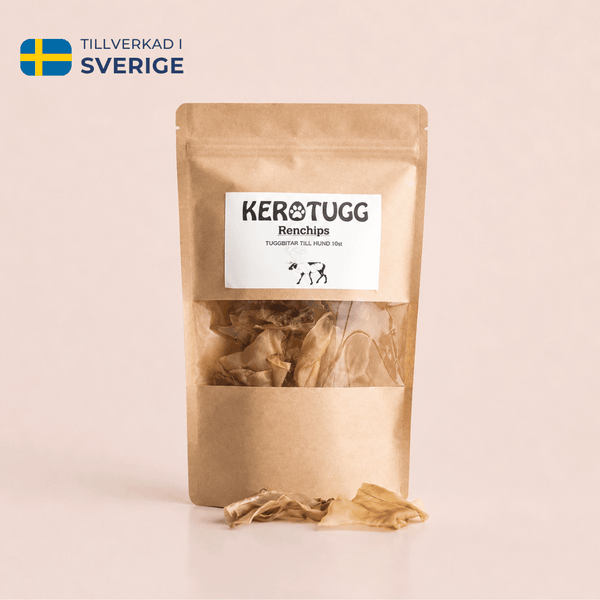
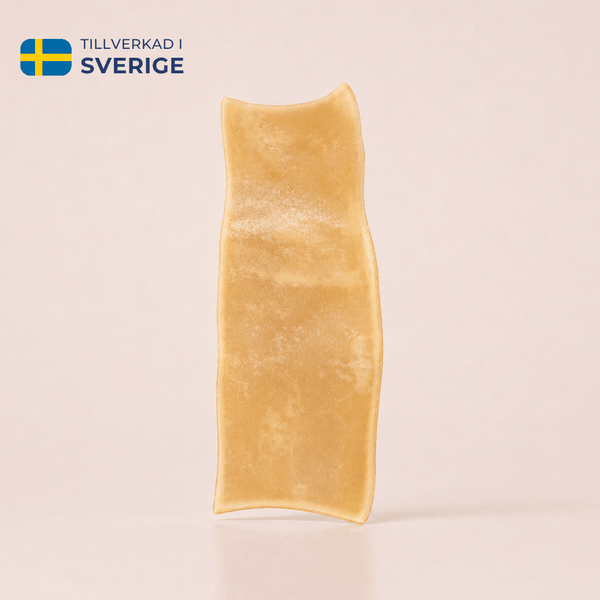
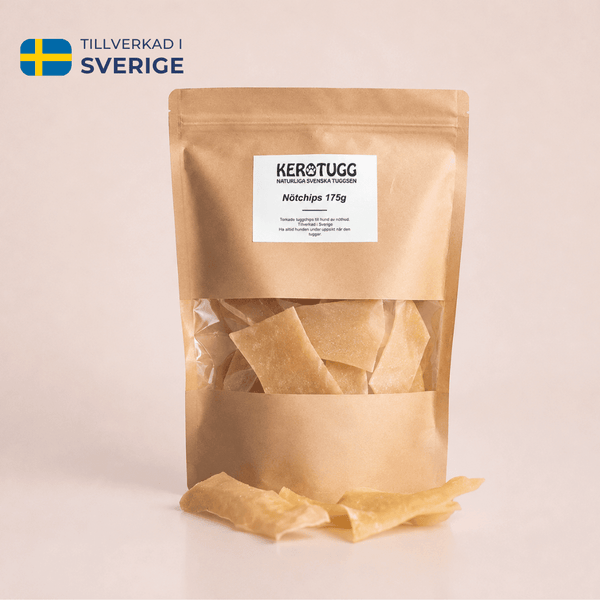
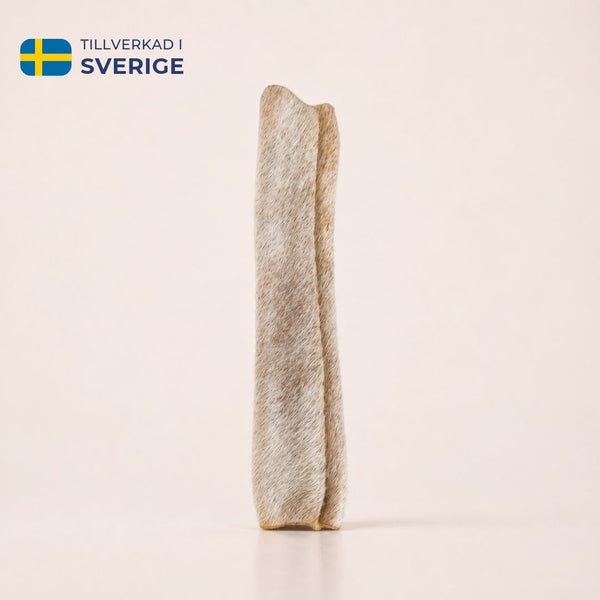
Beef and elk (chips)Nötchips till Hund 10-packEasy to chewShortSmaller dogs, variety in everyday life
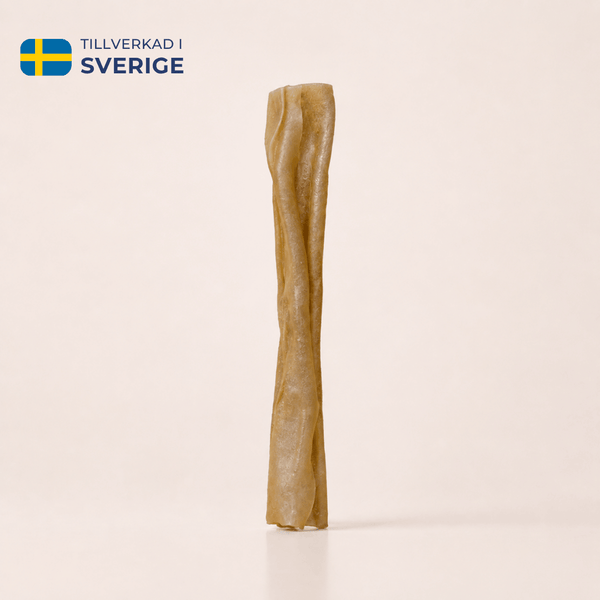
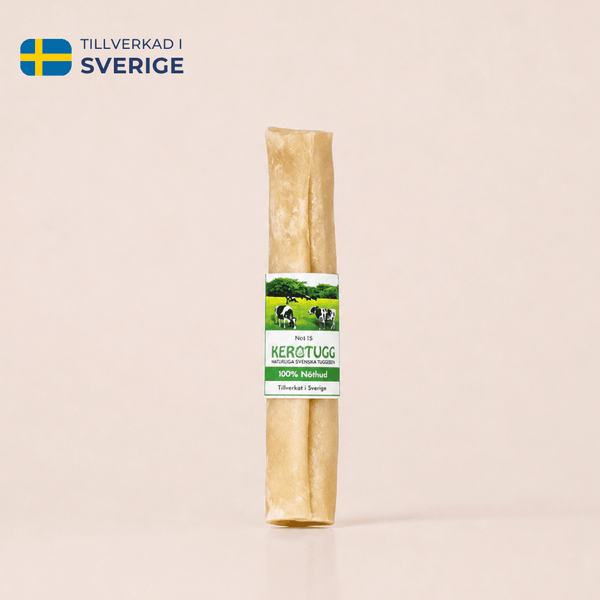
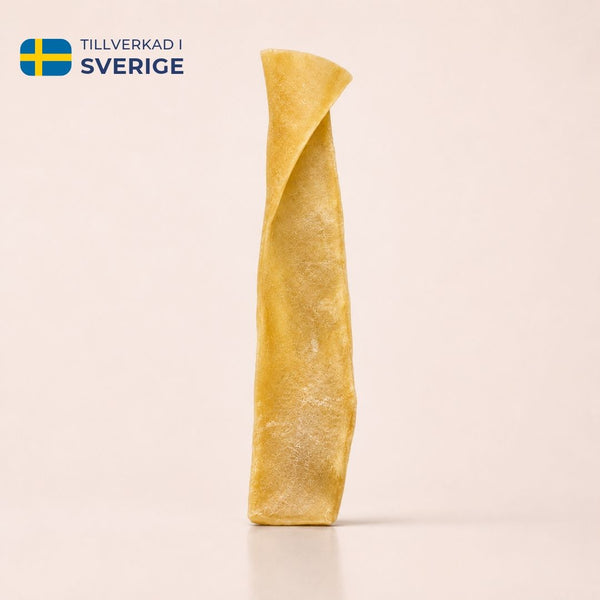
Beef (hide)Tuggben 100% NöthudMediumLongMost dogs
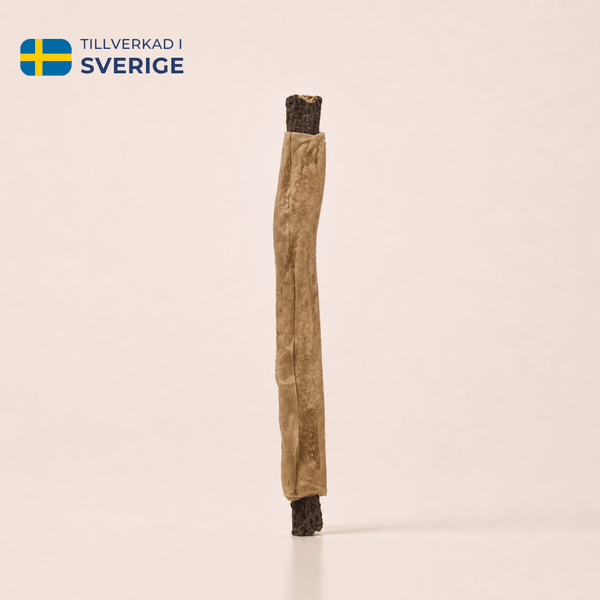
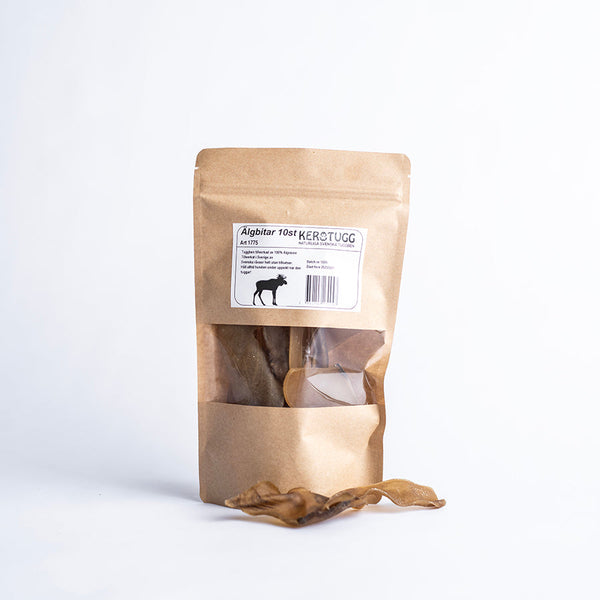
Elk (hide)Tuggben ÄlgMedium to hardLongSmall to large dogs, choose the size
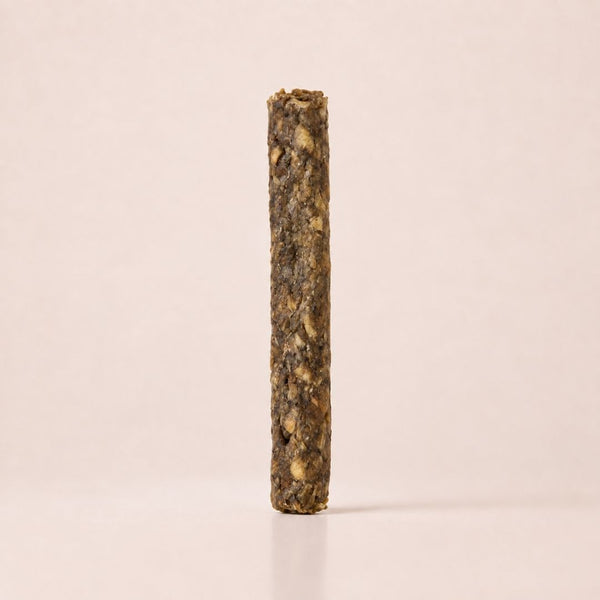
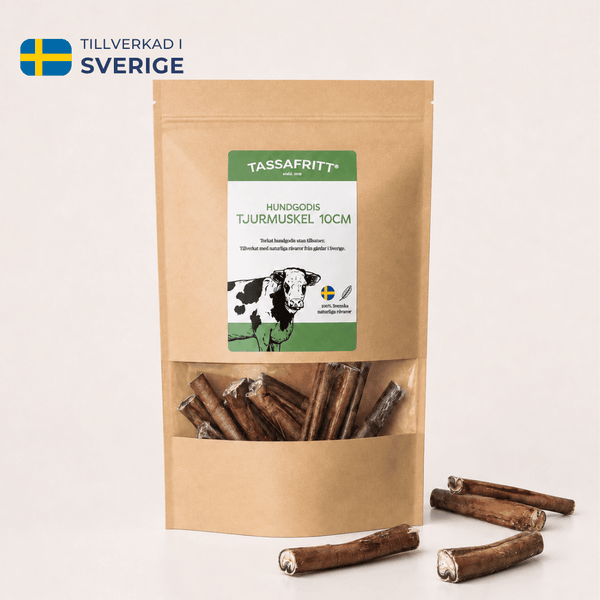
Beef (muscle)Tjurmuskelbitar 100 gChewyLongMost dogs
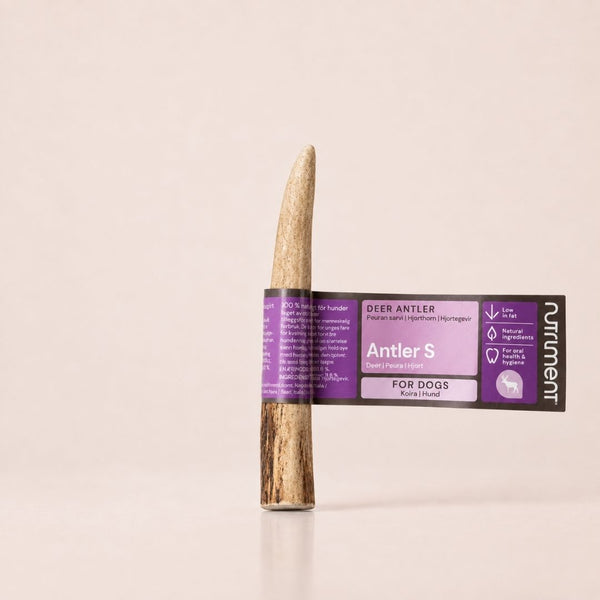
Deer (antler)HjorthornHardestWeeksPersistent chewers with healthy teeth

Swipe to see the full table →

Frequently asked questions about chew bones

Are dog chews dangerous for dogs?

A chew that is chosen correctly and given under supervision isn't dangerous, but three things are worth knowing. Rawhide is sometimes bleached to make it white and even, and cheap imported chews can contain glue or undeclared raw material – so look for chews that state which animal and which part they come from. A chew that is smaller than your dog's mouth opening can be swallowed whole, so it is better to choose one that is too big than too small. And very hard chews such as antlers can, in rare cases, crack a tooth in a dog that chews very forcefully.

From what age can a puppy have dog chews?

From the time the puppy starts eating solid food, which usually means around eight weeks, when it comes home. Start with the softest options and short chewing sessions under supervision. During teething, between about four and seven months of age, the jaw is extra sensitive – soft chews are better than hard ones then, and antlers should wait until the permanent teeth are in place.

How often can my dog have a chew?

Most dogs manage one chewing session a day without any problems, but chews are high in energy and should be counted as part of the daily ration. If you give a large chew several days in a row, you may need to make up for it with a little less food. A long-lasting chew, such as an antler, doesn't need to be given every day – put it away between sessions and bring it out again later.

What do I do when the chew has become small?
Take it away. When a piece has become so small that your dog can swallow it whole, it is a choking risk, and it is at the end of a chew that accidents happen. Swap the last piece for a new chew instead of letting your dog finish it.

Why won't my dog chew on its chew?

It is usually down to hardness or smell. A dog that is new to chews gives up on something that is too hard, and then a softer option such as reindeer hide or fallow deer hide is a better start. Fussy dogs tend to go for chews with a stronger taste, such as game or chews filled with meat. It is also common for the interest to come after a couple of tries – offer the chew when your dog is calm rather than in the middle of an activity.

Are dog chews suitable for dogs with a sensitive stomach?

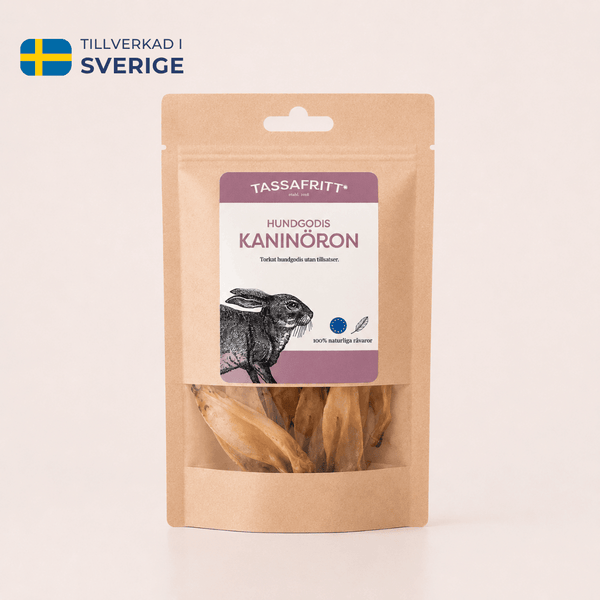
Usually yes, if the chew is made from a single declared raw material. What tends to upset a sensitive stomach is additives and unfamiliar protein, not the chewing itself. Lamb, rabbit and reindeer are common choices for dogs that don't tolerate beef or chicken. Introduce one chew at a time and keep sessions short for the first few days, so you can see what works.

Updated